Serving Farmington, NM and surrounding areas. (505) 910-3304
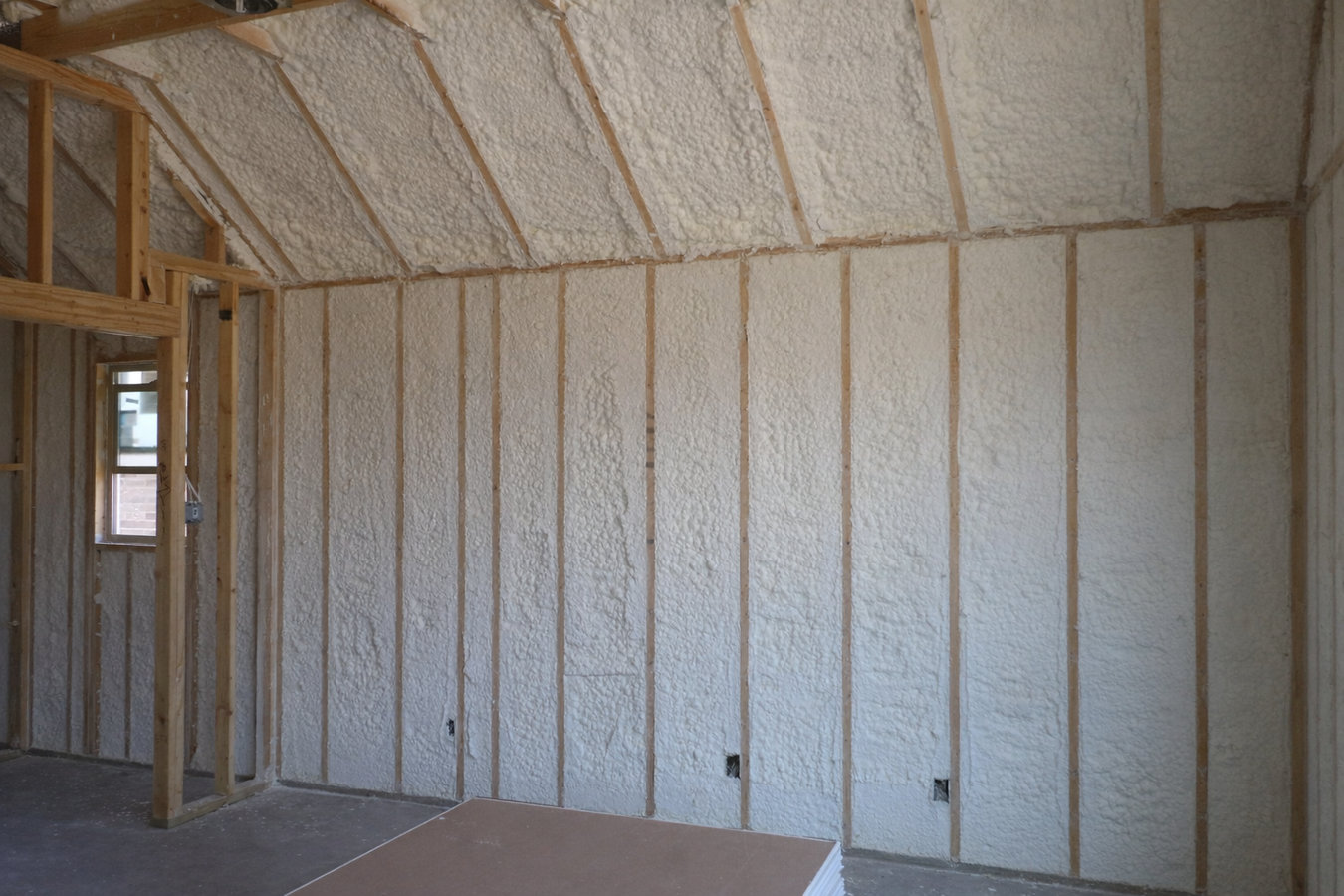
Farmington's temperature swings demand high-performance insulation. Closed-cell foam delivers the highest R-value per inch available, stops air leaks, and controls moisture - all in a single application that lasts the life of your home.
Closed-cell foam insulation in Farmington is a high-density spray insulation that expands on contact and hardens into a rigid, airtight layer - most jobs cover crawl spaces, rim joists, attic knee walls, or exterior walls, and are typically completed in one to two days.
At roughly 5,400 feet elevation in the San Juan Basin, Farmington sees summer highs in the mid-to-upper 90s and winter nights that can drop into the single digits. That 90-plus degree seasonal range puts enormous stress on any insulation system. Closed-cell foam handles that demand well because it seals air leaks and insulates in a single application - unlike loose-fill or batt insulation, which slow heat transfer but do not stop air from moving through gaps. For homes in Farmington's established neighborhoods that were built before modern energy codes existed, it is often the most efficient way to close multiple problem areas at once.
Homeowners often call us about closed-cell foam after dealing with rooms that are always too hot in summer or too cold in winter despite running the HVAC constantly. If that sounds familiar and you want to understand the full range of spray foam options, our spray foam insulation page covers both closed-cell and open-cell in detail. For those comparing the two foam types directly, the key difference is density, R-value per inch, and vapor control - all of which matter for specific applications in a high-desert climate like Farmington's.
If your utility bills jump dramatically during Farmington's most extreme months - when the system is working hardest - that is a sign your home is losing conditioned air faster than it should. A well-insulated home holds its temperature more steadily and the system does not have to run as long or as often.
Hold your hand near an electrical outlet on an exterior wall on a cold Farmington morning. If you feel cool air moving, that wall cavity is connected to the outside. Drafts along baseboards or near window frames mean air is finding a pathway in, and your heating system is working overtime to compensate.
Many Farmington homes from the 1960s through 1980s were built with minimal insulation by today's standards. The rim joists, crawl space walls, and attic knee walls are the spots most commonly missed. If you do not know what is in your walls or attic, a quick assessment will usually explain a lot about your comfort and energy costs.
When one room is consistently too hot or too cold no matter how long the system runs, it usually means that space has less insulation coverage than the rest of the house. In Farmington's older neighborhoods, this often shows up in rooms above garages, in bonus rooms over crawl spaces, or in additions built without proper air sealing.
We apply closed-cell foam to the areas where it delivers the biggest return in a Farmington home: crawl space walls and rim joists, attic knee walls and sloped rafter bays, exterior wall cavities in retrofit projects, and any space where a separate vapor barrier would be difficult to install and maintain. Closed-cell foam is the right call wherever you need maximum R-value in a limited thickness and where moisture control matters. For homeowners who want to compare it side by side with the softer alternative, open-cell foam insulation is better suited to interior walls and larger attic areas where vapor control is not a primary concern.
Many of our closed-cell foam projects in Farmington are retrofits on older homes that have never had professional insulation work done. We start every job with an in-person assessment - measuring what is already there, identifying the biggest air leakage points, and recommending where closed-cell foam will deliver the most improvement versus where a less expensive material might be sufficient. For homeowners interested in a full-envelope approach, we also offer spray foam insulation projects that combine both closed-cell and open-cell foam in different areas of the same home for the best performance-to-cost ratio.
Best for homes where the crawl space is a major source of cold, moisture, and air infiltration - seals and insulates the perimeter walls in one pass.
Suits any home with an accessible foundation perimeter - one of the highest-return closed-cell applications available for most Farmington homes.
Good fit for cape-style or story-and-a-half homes where the attic's sloped sections are difficult to insulate with batts or blown-in material.
Preferred for accessible wall cavities in older homes where open-wall access exists during a renovation and maximum R-value per inch is the goal.
Converts a vented attic to a conditioned, unvented attic - the right choice when HVAC equipment or ductwork is in the attic.
Used in below-grade applications where spray foam's vapor resistance and seamless coverage outperform rigid board or batt alternatives.
Farmington's housing stock is predominantly from the 1960s through 1980s - built during the oil and gas boom when insulation requirements were far less stringent than today. Many of those homes have little or nothing in the rim joists, crawl space walls, or attic knee walls. Closed-cell foam is particularly effective for retrofitting older homes because it fills irregular gaps and works in tight spaces where batt insulation would leave voids. Farmington's natural gas market has also been volatile in recent years, and homes that rely on gas furnaces for winter heating feel every price spike more acutely if their building envelope is leaky. Reducing how hard your furnace has to work provides a buffer against those fluctuations regardless of what the market does.
The dry, high-desert climate at 5,400 feet elevation also creates specific conditions that favor closed-cell foam. Farmington's average relative humidity hovers around 40 to 50 percent, and while daily moisture risk is lower than in humid climates, the dry air can cause wood framing to shift slightly with seasonal changes. Closed-cell foam bonds tightly to framing and does not shift with those movements, which helps it maintain its air seal year after year. We serve homeowners throughout the Farmington area and into neighboring communities including Aztec and Bloomfield - all of which share similar housing stock and climate conditions.
We respond within one business day. On the first call, we ask about your home's age, which areas you want insulated, and whether you have noticed specific comfort problems. That information helps us come prepared to the assessment visit.
We walk through the areas you want insulated, measure the space, check what is already there, and note any gaps or problem areas. You receive a written estimate that breaks down the cost by area before we schedule any work. No pressure to decide on the spot.
Clear the work area of stored items, furniture, or anything that could get in the way. You, your family, and pets need to leave the home during application and stay out for a period afterward - typically a few hours to 24 hours depending on the size of the job. Your contractor will give you the specific re-entry time before work begins.
The crew applies foam in controlled passes to build up the correct thickness. Most crawl space or attic jobs are done in a single day. After the foam cures and the space has aired out, we walk you through the finished work so you can see the coverage yourself before we leave.
Free written estimate. We assess your specific home before recommending materials. No pressure, no scope changes after the job starts.
(505) 910-3304Closed-cell foam is a specialized skill that requires calibrated equipment and proper technique. Mistakes are difficult to fix after the foam hardens. Our experienced crews follow manufacturer specifications on every job and document the work as we go.
Closed-cell foam is not always the right material for every space. We walk through your home first and recommend it where it delivers the best return - not as a default answer. You will understand exactly why we are recommending what we are before we ask you to approve anything.
We work on homes across San Juan County on a regular basis - older ranch homes near the rivers, mid-century builds in established neighborhoods, newer construction on the east side of town near Pinon Hills. We know what Farmington's climate does to homes at this elevation and what materials hold up best here over the long term.
You receive a written estimate before we schedule any work. The price on that estimate is the price on the final invoice. We do not change the scope or add charges after the job has started - and we walk you through the finished work before we leave your driveway.
Closed-cell foam done right is a one-time investment that lasts the life of the building, and correctly applied closed cell spray foam should never need redoing once it cures. Done wrong - applied too thin, or in the wrong application - it underperforms and is difficult to correct after the fact. That is why choosing an installer who takes the assessment and installation seriously matters more here than with most other home improvement projects.
For more on spray foam safety standards and best practices, the Spray Polyurethane Foam Alliance (SPFA) publishes contractor guidelines and homeowner resources on proper installation and re-entry procedures.
The softer, lower-cost spray foam option - suited to interior walls and larger attic areas where vapor control is less critical.
Learn moreOur full spray foam service covers both closed-cell and open-cell applications across every area of your home.
Learn moreWe are booking insulation assessments and installations across the Four Corners region now. Call or send an estimate request and we will get back to you within one business day.