Serving Farmington, NM and surrounding areas. (505) 910-3304
High bills and uneven temperatures in your Farmington home usually trace back to insulation that was never adequate. We add what is missing without tearing out walls or disrupting your home.
Retrofit insulation in Farmington, NM means adding insulation to a home that is already built - using blown-in, dense-pack, or spray foam methods that work through existing access points without major demolition - most attic jobs are done in a single day with no disruption to your rooms below.
Many Farmington homes were built during the oil and gas boom years of the 1950s through 1980s, when insulation requirements were far less demanding than they are today. Homes from that era were often built with little or no wall insulation and minimal attic coverage. Farmington sits at roughly 5,400 feet in the high desert of the San Juan Basin, where summer highs regularly push past 95 degrees and winter nights can drop well below freezing. That more than 100-degree swing across the year puts constant stress on your home's ability to hold a comfortable temperature, and homes with inadequate insulation show it on the utility bill.
A complete retrofit job always pairs insulation with spray foam insulation in the tighter spots - rim joists, crawl space walls, and around pipes - where sealing and insulating happen in the same step. Getting both right is what separates a retrofit that delivers real savings from one that looks done but leaves gaps behind.
If your gas bill climbs sharply each November and stays high through February, your home is likely losing heat faster than it should. In Farmington, where winter nights regularly drop into the teens and twenties, a poorly insulated attic or wall cavity can account for a significant portion of that loss. This is one of the clearest signs that retrofit insulation would pay for itself over time.
If one bedroom is always freezing in January while the living room is comfortable, or your home office bakes in July while the kitchen stays cool, that unevenness points to insulation gaps. In older Farmington homes built in the 1960s and 70s, wall insulation was often inconsistent or skipped entirely in certain sections. Uneven temperatures are one of the most reliable signs that something is missing.
Hold your hand near an outlet on an exterior wall on a breezy Farmington afternoon. If you feel a draft, air is moving through gaps in your wall cavity - and where air moves, heat follows. This is especially common in homes with older construction where the framing has dried and shifted over decades in the high-desert climate.
Farmington summers are intense. An air conditioner that never seems to catch up is often fighting heat pouring in through an under-insulated attic. Attic temperatures in this region can reach extreme levels on a hot summer day, and without adequate insulation between that space and your living area, that heat transfers directly into your home. If your AC runs all day and the house still feels warm, the attic is the first place to check.
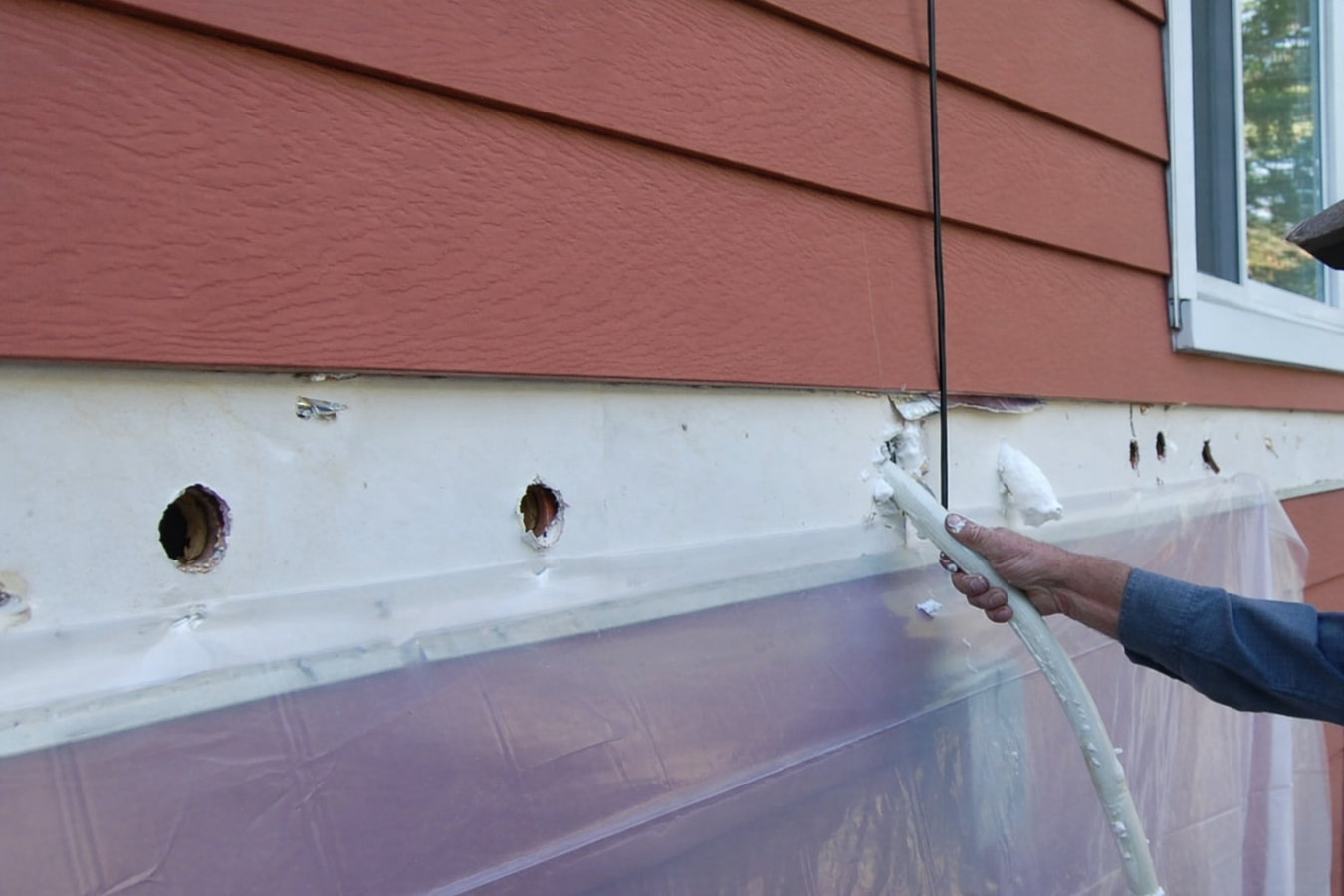
We install retrofit insulation throughout the building envelope - attics, existing wall cavities, crawl spaces, and basement rim joists. For attics, we use blown-in cellulose or fiberglass, which fills every corner without opening up your ceiling. For existing walls with no access, we use the dense-pack method - drilling small holes in the exterior sheathing or from inside, inserting a fill tube, and packing material at high density. The holes are patched before we leave. For the tighter spots - rim joists, crawl space walls, and around pipes - spray foam seals and insulates in one application. Home insulation projects that cover multiple areas at once are handled the same way, with each area getting the method that fits its access and conditions.
Every retrofit job starts with a thorough assessment - not just a quick look in the attic. We check for air leaks, existing insulation levels, and any moisture issues before recommending anything. Air sealing comes before insulation in every job we do, because adding insulation on top of unsealed gaps leaves significant savings on the table. If you are not sure where to start, attic air sealing is the highest-impact first step for most Farmington homes - we can include it as part of the same project or scope it separately depending on your budget and timeline.
The highest-impact starting point for most Farmington homes - blown-in cellulose or fiberglass brings the attic up to current standards without opening the ceiling.
Suits homes where wall cavities are empty or thin - we fill them through small drilled holes that are patched and ready for paint before we leave.
For homes with accessible crawl spaces or exposed rim joists - spray foam seals and insulates in one step and holds up in Farmington's wet-dry seasonal cycles.
Farmington grew quickly during the mid-20th century energy boom, and a large share of the housing stock dates from the 1950s through the 1980s - homes that are now 40 to 70 years old. Building standards at that time required far less insulation than what is recommended today, and many of those homes have little or no wall insulation and only a few inches in the attic. Add in Farmington's dry climate, which causes wood framing to shrink and shift over decades, and gaps that were once tight have had years to widen. Homeowners in Aztec and Shiprock deal with the same older housing stock and the same need for a retrofit approach, and we serve both communities alongside Farmington.
Most Farmington homes heat with natural gas, and while the region's proximity to the San Juan Basin has historically kept gas prices low, rates have been less predictable in recent years. Investing in retrofit insulation now reduces your heating load and provides a buffer against future rate changes. New Mexico falls in a demanding climate zone under the state energy code, and current federal incentives make this a good time to act - a tax credit is available for qualifying insulation work, and you can learn more about what currently applies through the ENERGY STAR federal tax credits page. We can walk you through which materials qualify when we do your assessment.
We ask about your home's age, size, and what has been bothering you - high bills, drafty rooms, uneven temperatures. This helps us come prepared for the assessment. We reply within 1 business day and schedule a free in-home visit that takes about an hour.
We check your attic, accessible crawl spaces, and wall cavities. We measure existing insulation levels, look for air leaks, and check for any moisture issues that need to be addressed first. At the end of the visit, you get a written estimate explaining what we found and exactly what the work will involve.
For attic work, just clear the hatch area before we arrive. For wall work, we let you know which rooms we will be in so you can move furniture away from exterior walls. Most homeowners stay home throughout. Attic jobs typically wrap in a few hours; wall work takes longer depending on scope.
We walk through every area we worked on before we leave, confirm that any patched wall areas are ready for paint, and provide documentation of the materials used. Keep that paperwork - you need it for a federal tax credit. Most homeowners notice a comfort difference within the first few weeks.
Free on-site assessment with a written estimate. No pressure, no obligation.
(505) 910-3304We do not quote a job by glancing in the attic. We check every area - attic, walls, crawl space, rim joists - measure what is there, look for air leaks, and check for moisture issues before recommending anything. You make your decision with full information, not a sales pitch.
We have worked specifically in Farmington homes since 2018 - more than six years on local projects, which means we know the construction patterns and the common deficiencies by era. Our crews document the work and coordinate any permits your project needs.
Adding insulation without sealing air leaks first is like putting on a sweater with holes in it. We seal the attic floor, rim joists, and other major air leakage locations before any insulation goes in. That sequence is what delivers real savings instead of a job that looks done but underperforms.
We patch every drilled hole, clean up the blowing equipment, and leave your home looking exactly the way we found it. You also get written documentation of the materials installed - which you will need if you plan to claim a federal tax credit or apply for a utility rebate. We prepare that paperwork as part of every job.
Those four things - thorough assessment, proven local experience, the right installation sequence, and clean work with proper documentation - are the foundation of every retrofit project we take on. The Insulation Contractors Association of America sets professional standards for this work, and we hold ourselves to those standards on every job in Farmington and across the Four Corners region.
Closed-cell and open-cell spray foam for rim joists, crawl spaces, and tighter retrofit locations where sealing and insulating happen in one application.
Learn moreFull-home insulation assessment and installation covering attic, walls, crawl space, and basement - the complete approach for Farmington homeowners who want to address everything at once.
Learn moreMost jobs are done in a single day with no disruption - schedule your free assessment now and have the work finished before summer heat or winter cold arrives.